
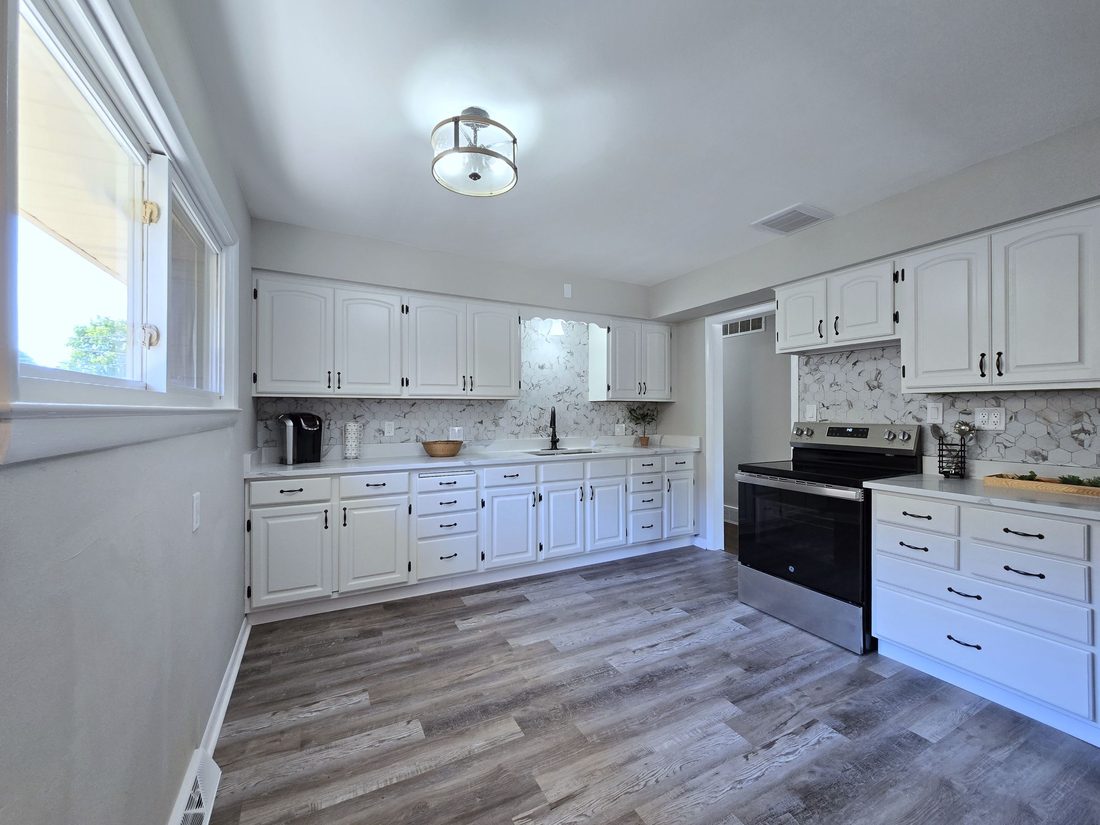
Let's be straightforward about this: a cash offer is lower than what a fully renovated version of your house would list for. Any buyer who tells you otherwise is selling something. The useful question isn't which number is bigger on paper — it's what you actually take home, and when.
"Market Value" Means Something Different for a House That Needs Work
Most disagreements about cash offers come from comparing two different things and calling them both value.
The number in your head is usually one of three: what Zillow says, what your neighbour's renovated house sold for, or what you owe plus what you hoped to net. None of those is the market value of your house in its current condition.
Automated valuations work from public records and recent sales. They know your square footage, bed and bath count, lot size, and year built. They do not know that the roof is at the end of its life, the kitchen is original, or the basement takes water. They assume average condition for the neighbourhood — which is exactly the assumption that fails on the houses people most want to sell quickly.
The honest framing is that your house has two values. There is the after-repair value, what it is worth once the work is done, which is roughly what the automated estimate is describing. And there is the as-is value, what a buyer will pay today given the work required and the risk of discovering more. The gap between them is not a cash buyer's greed. It is the cost and risk of the work, and somebody pays it either way — the only question is who.
What Listing Actually Costs
On a traditional sale, subtract:
- Agent commission — historically 5–6% of the sale price, now more negotiable following changes to how buyer-agent compensation is handled, but rarely zero
- Seller-paid closing costs — typically another 1–3%
- Pre-list repairs and cleaning — whatever it takes to photograph well and pass inspection
- Post-inspection credits — the negotiation that happens after you're already under contract
- Holding costs — mortgage, taxes, insurance, and utilities for every month the home is on market and in escrow
Inside the City of Milwaukee, add the Certificate of Code Compliance the city requires at sale for all non-owner-occupied one- and two-family dwellings city-wide and for owner-occupied one- and two-families in the six designated code compliance areas — $75 per building, inspected by the Department of Neighborhood Services. Suburban municipalities set their own rules, so confirm yours. On top of that sits Wisconsin's Real Estate Condition Report, which is not a cost so much as a disclosure document every buyer will read closely.
The Metro Context
Milwaukee metro median sale prices have been running in the high $300,000s, with well-priced move-in-ready homes moving quickly. That headline number describes updated homes. It does not describe a house with a failing roof, an unfinished basement project, or thirty years of deferred maintenance. Those sit, accumulate price cuts, and attract buyers whose financing won't close on the property's condition anyway.
A Worked Example, Side by Side
Numbers make this concrete. Take a Milwaukee bungalow that would be worth $300,000 fully renovated, currently needs about $40,000 of work, and would realistically list in its present condition at $245,000. These are illustrative figures, not a quote — but the shape of the comparison is what matters.
| List it as-is | Renovate, then list | Cash sale | |
|---|---|---|---|
| Sale price | $245,000 | $300,000 | $205,000 |
| Renovation cost | — | −$40,000 | — |
| Agent commission (~5%) | −$12,250 | −$15,000 | — |
| Seller closing costs (~2%) | −$4,900 | −$6,000 | — |
| Pre-list prep, cleaning, staging | −$3,000 | −$3,000 | — |
| Post-inspection credits | −$6,000 | −$1,000 | — |
| Holding costs while selling | −$4,500 (3 mo) | −$10,500 (7 mo) | −$500 |
| Approximate net | $214,350 | $224,500 | $204,500 |
Read that honestly and the conclusion is not "cash always wins." Listing as-is nets roughly $10,000 more than the cash offer, and renovating first nets more still — if the renovation lands on budget, the house sells in the time assumed, the buyer's financing closes, and you had $40,000 available to spend in the first place.
What the table cannot show is risk. The renovation column assumes seven months of your life, capital you may not have, and a market that behaves. The cash column is a known number on a date you pick. Which is worth more depends entirely on your circumstances, and anyone who tells you there is a universal answer is selling something.
Timeline, Side by Side
| Listing with an agent | Cash sale | |
|---|---|---|
| Prep, repairs, cleaning | 2–6 weeks | None |
| Photos, listing, showings | 2–8+ weeks | None |
| Offer to contract | Days, once you have one | ~24 hours from viewing |
| Inspection and negotiation | 1–3 weeks | None — inspected before the offer |
| Appraisal and underwriting | 3–6 weeks | None |
| To closing | Typically 45–75 days total | About a week once title is clear |
| Risk of falling through | Real — financing, appraisal, inspection | Minimal |
The rows that matter most are the last two. Speed is easy to quantify and easy to overvalue. Certainty is what people are usually actually buying — the knowledge that on a specific date the money arrives and the problem is over.
Where the Gap Narrows to Nothing
The comparison above assumes a house that can be listed. Change a few facts and the arithmetic moves sharply:
- Condition below the financing line. If the roof is failing, the furnace is dead, or there is active water in the basement, FHA and VA appraisals will flag it and conventional lenders get nervous. Your buyer pool shrinks to cash and renovation loans, and the "as-is list price" you were comparing against was never real.
- Longer time on market. Every additional month adds holding costs and usually a price reduction. A house that takes seven months instead of three does not net what the spreadsheet said in month one.
- A fallen-through contract. Roughly the worst outcome in a listed sale: two months gone, the listing is now stale, and buyers ask why it came back on.
- Cleanout costs. On an estate or hoarding-condition property, clearing the house can run into thousands before a photographer ever arrives.
- A deadline. A sheriff's sale, a tax redemption date, a job start, or a closing on your next house. Certainty has a value, and when the deadline is real that value is not small.
When Listing Clearly Wins
We'll say this plainly, because it's true more often than cash buyers admit. List your house if it's in good condition, you have time, you can absorb the carrying costs while it sells, and no deadline is bearing down on you. In that situation the market will pay you more than we will, even after commission. Call an agent.
What a Good Agent Does That We Don't
It would be self-serving to skip this, so here it is plainly. An experienced local agent brings things a cash buyer does not:
- Market exposure. The MLS puts your house in front of every buyer and every buyer's agent in the metro. Competition is what produces above-asking offers, and only the open market creates it.
- Pricing judgment grounded in what is actually selling on your streets this month.
- Presentation. Photography, staging advice, and the prep list that makes a house show well — which genuinely moves the number.
- Negotiation and process management through inspection, appraisal, and financing.
- Fiduciary duty to you. This is the real one. Your agent represents your interests. A cash buyer, however straight, is the counterparty — we are on the other side of the table, and you should read our offer accordingly.
If your house is in decent condition and you have time, that package is worth its commission and then some. We would rather tell you that up front than spend three weeks arriving at it together.
When a Cash Sale Wins
The math flips when any of these are true:
- The house needs real work and you don't have the capital or appetite to do it. Renovation costs come out of your pocket now; the return is speculative.
- You're on a clock — a sheriff's sale, a redemption deadline, a job start date, a closing on the next house.
- Carrying costs are bleeding you — especially on a vacant or inherited property you're insuring and heating through a Wisconsin winter.
- Certainty matters more than maximum price. Financed offers fall through on appraisal and underwriting. A cash close doesn't.
- You can't or won't manage showings — tenants in place, an estate full of belongings, health issues, or you're out of state.
How a Cash Offer Is Built
There's no mystery to it. After-repair value, minus estimated repair cost, minus the buyer's holding and resale costs and margin. On a home worth $300,000 renovated that needs $40,000 of work, an offer somewhere in the $195,000–$215,000 range is ordinary arithmetic, not a lowball.
Ask any cash buyer to walk you through those three numbers. If they won't, that tells you something. And be wary of an offer that gets revised downward right before closing — that tactic is common enough that you should ask, up front, whether the number you're given is the number you'll sign.
The Three Numbers, Opened Up
A cash offer is after-repair value, minus the cost of the work, minus the buyer's costs and margin. That is genuinely all it is. Here is what is inside the third number, which is the one buyers are vaguest about:
- Acquisition costs — title, closing, and transfer fees on the purchase.
- Financing — most buy-and-renovate operators use short-term capital, and it is not cheap. Interest accrues for the entire hold.
- Holding costs during the renovation — taxes, insurance at a vacant or builder's-risk rate, utilities, and heat through however many Wisconsin months the project takes.
- Resale costs — the buyer pays an agent commission and seller closing costs on the way out, on the higher after-repair price. That alone is often 6–8% of the exit number.
- Contingency — because renovation budgets on 80-year-old houses are estimates, not quotes.
- Margin — the actual profit, which after all of the above is a smaller share of the spread than sellers assume.
Ask any buyer to show you all three figures for your specific house. A buyer who says "we just can't go higher" without opening the arithmetic is asking for trust they have not earned. One who walks you through an after-repair value, a scope of work, and their costs is showing you something you can check against your own knowledge of the house.
Why Renovation Budgets Overrun on Milwaukee Houses
This matters whether you renovate yourself or sell to someone who will, because it is the single biggest driver of the gap between the two numbers.
Older housing stock does not reveal itself until it is opened up. Plaster comes off and the wiring behind it is a mix of three eras. The bathroom floor comes up and the subfloor is soft. The kitchen gets gutted and the drain stack turns out to be galvanised. None of that is on any pre-purchase inspection, because inspectors do not open walls.
Add the items a lender or municipality will insist on before anyone can buy the finished product — egress windows on basement bedrooms, handrails, GFCI protection, a furnace that is genuinely serviceable — and a $30,000 cosmetic refresh becomes a $55,000 project with a permit file.
If you are weighing renovating before listing, this is the risk you are personally taking on. It is entirely doable, and plenty of homeowners do well at it. But you should price it with a real contingency and a realistic timeline, not a best case. Our own project pages show what these renovations actually involve, start to finish.
Not All "Cash Buyers" Are the Same
The label covers three quite different businesses, and knowing which you are talking to changes what you should expect:
- A wholesaler puts your house under contract and then sells that contract to an actual buyer for a fee. They may never intend to close themselves. The risk is that if they cannot find an end buyer, your sale evaporates — sometimes after you have turned down other options. Ask directly: do you intend to close in your own name, or assign this contract?
- An iBuyer is an algorithmic buyer that typically wants homes in reasonable condition, charges a service fee, and adjusts the price after an inspection. Convenient for a newer house, generally uninterested in one that needs real work.
- A local buy-and-renovate operator — which is what we are — buys with its own funds, does the renovation, and resells. The offer is lower than retail because the renovation and the risk are being taken on by someone else, and the number should not move between offer and closing.
Questions to Ask Any Cash Buyer
- "Will you show me proof of funds?" A real buyer produces a bank statement or a lender letter without hesitation.
- "Are you closing in your own name or assigning the contract?" There is nothing inherently wrong with assignment, but you deserve to know whether the person in your kitchen is the buyer.
- "Is this number final?" Ask whether the price can be revised after inspection, and get the answer in writing. Late renegotiation is the single most common complaint about this industry.
- "Walk me through your three numbers." After-repair value, repair estimate, costs and margin. A buyer who will not show their arithmetic is asking you to trust a number you cannot check.
- "How much earnest money, and is it non-refundable?" Meaningful earnest money signals commitment.
- "Who is the title company, and can I pick?" A neutral, established title company protects you.
- "Can I see houses you've actually bought?" Ask for addresses, photos, or a project portfolio — and check that the work is real. Ours is at goodlandhomebuyers.com/projects.
Read the Contract Before You Sign It
Whatever route you choose, the document is where the promises either exist or do not. Specifically, look for:
- The inspection or due diligence period. A long open-ended period is a buyer keeping the right to renegotiate. A buyer who has already inspected should not need one.
- An assignment clause. Language permitting the buyer to assign the contract means the person signing may not be the person closing. Not automatically bad — but you should know, and you can strike it.
- Earnest money. How much, when it is deposited, who holds it, and under what circumstances it becomes non-refundable. Trivial earnest money signals a trivial commitment.
- The closing date and any extension rights. Unilateral extensions in the buyer's favour turn your certain date into their option.
- Who pays what — title insurance, transfer fee, prorated taxes, any closing fee.
- What happens to your belongings. If you were told you can leave things behind, that should be written down.
Wisconsin real estate contracts are binding once accepted. Having your own attorney read a purchase agreement costs a few hundred dollars and is cheap insurance on the largest transaction most people ever make.
Red Flags Worth Walking Away From
- Pressure to sign today, or an offer that "expires" in hours.
- Any request for money from you up front, for any reason.
- A price cut announced days before closing, with no new information to justify it.
- Refusal to put the offer in writing, or a contract with blanks to be filled in later.
- A document that transfers your deed in exchange for someone "taking over payments." Have any deed transfer reviewed by your own attorney before signing.
- No verifiable local track record — no addresses, no photos, no reviews you can trace to real people.
Get More Than One Offer
The best protection against a bad number is a second number.
Contact two or three buyers and give each the same information — the same condition disclosure, the same access, the same timeline. Then compare on net proceeds and terms, not on the headline figure. A slightly lower offer with no inspection contingency, real earnest money, and a firm closing date is frequently worth more than a higher one that can be walked back.
And ask each of them the same question: can I see houses you have actually bought and what you did with them? It is a simple test and it separates operators from marketers quickly. Ours are at goodlandhomebuyers.com/projects — real Milwaukee and Cudahy houses, before and after, with the story of each sale.
Run Your Own Comparison
Do this on paper before you decide anything. Start with an honest list price for your home in its current condition — not the Zillow estimate, which assumes average condition for the neighbourhood. Subtract commission, seller closing costs, prep, likely post-inspection credits, and carrying costs for a realistic number of months. Then compare that figure to a cash offer with no fees and a date you choose.
Sometimes listing wins, and when it does we will say so. Our own side-by-side comparison of selling options lays the routes out plainly, and a free offer costs nothing — it just gives you a real number to compare against instead of a guess.
Cash Offer vs. Listing in Milwaukee — Common Questions
How much less than market value do cash buyers pay?
It depends almost entirely on condition. A cash offer is built from after-repair value minus the cost of the work minus the buyer's holding, transaction, and margin. On a home needing little work the gap is wide and listing is usually better. On a home needing $40,000 of work the gap narrows sharply once you count commission, repairs, credits, and months of holding costs. Ask any buyer to show you their three numbers.
Is a cash offer always lower than listing?
The headline price is, yes. The net is a different question. Listing carries commission, seller closing costs, pre-sale prep, post-inspection credits, and carrying costs for every month on market and in escrow. Once those come out, the difference is often much smaller than sellers expect — and on a house that cannot pass a lender's appraisal, the retail price you were comparing against was never available.
How fast can a cash sale actually close in Milwaukee?
About a week is realistic once title is clear, since there is no lender, appraisal, or underwriting. The practical constraints are the title search and any payoffs — a mortgage, delinquent taxes, or a probate matter. If you need longer, you set the date; speed is an option, not an obligation.
What is the difference between a wholesaler and a real cash buyer?
A wholesaler puts your house under contract and sells that contract to someone else for a fee, and may never close themselves. If they cannot find an end buyer, your sale can collapse. A buy-and-renovate operator closes with its own funds and does the work. Ask directly whether they intend to close in their own name or assign the contract.
Do I pay any fees or commission on a cash sale?
You should not. No commission, no listing fees, no closing-cost split, no repair credits. Existing obligations — a mortgage payoff, delinquent taxes, liens — still come out of the proceeds at closing, exactly as they would in any sale.
Can a cash buyer lower the price before closing?
Some do, and it is the most common complaint about the industry. Ask up front whether the number can change after inspection and get the answer in writing. A buyer who has already inspected the property before making the offer has no legitimate reason to renegotiate later.
When should I list with an agent instead?
When the house is in good condition, you have time, you can absorb the carrying costs while it sells, and no deadline is bearing down on you. In that situation the open market will pay you more than we will, even after commission. We would rather tell you that than waste your time.
Do I need to make repairs or clean before a cash sale?
No. Take what you want and leave the rest — furniture, appliances, whatever is in the basement. We handle the cleanout and the renovation. Our project pages show houses we bought with the contents still inside.
Why is your offer lower than Zillow's estimate?
Automated valuations work from public records and recent sales, and they assume average condition for the neighbourhood. They cannot see a failing roof, an original kitchen, or a wet basement. That estimate is closer to your home's after-repair value than its as-is value. The gap between the two is the cost and risk of the work — somebody pays it either way.
Can I see the numbers behind your offer?
Yes, and you should insist on it from anyone. Ask for the after-repair value they are using, their scope and cost of work, and their holding, financing, and resale costs. Their resale alone typically carries 6–8% in commission and closing costs on the higher exit price. A buyer who will not open the arithmetic is asking for trust they have not earned.
Should I get more than one cash offer?
Yes. Give two or three buyers the same information and the same access, then compare net proceeds and terms rather than headline price. A slightly lower offer with no inspection contingency, meaningful earnest money, and a firm closing date is often worth more than a higher one that can be renegotiated.
What should I look for in the contract?
The length of any inspection or due diligence period, whether the buyer can assign the contract to someone else, how much earnest money there is and when it goes hard, the closing date and any unilateral extension rights, who pays which closing costs, and — if you were told you can leave belongings — that it is written down. Wisconsin contracts bind on acceptance, so have an attorney read it.
Do I lose money by not putting it on the MLS?
On a house in good condition, usually yes — market exposure creates competition and competition raises price. That is the honest case for listing, and if your house qualifies you should. On a house that a lender will not finance in its current condition, the MLS price you are imagining was never actually available to you.
How do I know a cash buyer is legitimate?
Ask for proof of funds, ask whether they will close in their own name or assign the contract, ask whether the price can change after inspection and get the answer in writing, and ask to see specific houses they have bought and renovated. Real operators answer all four without hesitation.