
When a parent dies owning a house, the first question is almost never the emotional one — it's a practical one. Can we sell it? The answer in Wisconsin depends almost entirely on how the deed was written, and that's worth checking before you assume you're facing a long court process.
Start With the Deed, Not the Will
Families almost always begin with the will, and it is usually the wrong document to look at first. The will says who inherits. The deed says whether probate is needed at all — and if the deed carries survivorship rights or a transfer-on-death designation, the will never touches the house.
Pull the recorded deed from the Register of Deeds in the county where the property sits. Milwaukee County's Register of Deeds maintains searchable records, and most Wisconsin counties offer online access. You are looking for three things: how the owners are named, whether the words "joint tenants" or "survivorship marital property" appear, and whether any later document — a TOD deed, a transfer into a trust — was recorded after the original purchase.
A fifteen-minute records search here regularly saves families months. We have seen more than one Milwaukee estate opened unnecessarily because nobody checked whether a transfer-on-death deed had already been recorded.
How to Actually Pull the Deed
Everything in this article turns on what the deed says, so here is how to get it.
Recorded deeds are held by the Register of Deeds in the county where the property sits. Milwaukee County's office is at the Courthouse, and most Wisconsin counties provide some level of online search; where online access is limited, a phone call or a visit will produce a copy for a small fee. Search by the owner's name or by the property address or tax key number.
What you are reading it for:
- How the owners are named. "John Smith and Mary Smith, husband and wife, as survivorship marital property" behaves very differently from "John Smith and Mary Smith."
- The words "joint tenants" or "with right of survivorship." These generally pass ownership automatically to the survivor.
- Anything recorded later. A transfer-on-death deed, a quit claim into a trust, or a life estate may have been recorded years after the purchase and changes everything.
- Encumbrances. Mortgages, judgment liens, and easements recorded against the parcel.
If the deed shows survivorship or a recorded TOD designation, the house may pass with nothing more than a certified death certificate and a recorded affidavit — no probate at all. That is a fifteen-minute check that regularly saves families months and thousands of dollars.
You May Not Need Probate At All
Joint tenancy with right of survivorship. If the home was held jointly with a surviving spouse or another person, ownership passes automatically. A certified death certificate and a recorded affidavit are typically all that's needed.
Transfer on Death Deed. Wisconsin has allowed these since 2008 under Wis. Stat. § 705.15. If the owner recorded a TODD naming a grantee beneficiary, the property passes automatically at death. The beneficiary records an affidavit of identity and survivorship and can sell. These turn up more often than people expect — check the recorded deed before assuming probate.
Trust ownership. If the home was deeded into a revocable living trust, the successor trustee can sell under the trust's terms.
Transfer by affidavit — for small estates. If the total property subject to administration in Wisconsin does not exceed $50,000 in gross value, Wis. Stat. § 867.03 allows an heir, a trustee of the decedent's revocable trust, or a former guardian to collect and transfer the decedent's property by affidavit instead of opening a probate. This can reach real estate: where the affidavit describes an interest in real property, a certified copy is recorded with the Register of Deeds in each county where the property sits. There is a catch worth knowing — a person named in the will as personal representative cannot take real property by this route. Given Milwaukee-area home values, a house alone often pushes an estate past the $50,000 ceiling, so confirm the gross figure with an attorney before relying on it.
If none of the above applies and the house is the main asset, you are opening a probate.
Wisconsin Is a Marital Property State — and That Matters
Wisconsin is one of a small number of community property states, operating under the Marital Property Act at Wis. Stat. ch. 766, and it shapes how a home passes when a married owner dies.
Property acquired during marriage is generally marital property, owned equally by both spouses regardless of whose name appears on the deed. On death, the deceased spouse's half is what passes under the will or by intestacy; the surviving spouse already owns the other half.
Wisconsin also allows spouses to hold a home as survivorship marital property, which passes the whole interest to the survivor automatically at death — the marital-property equivalent of joint tenancy, and very common on Milwaukee-area homes bought by married couples.
The practical takeaway for a surviving spouse: you may already own the house outright and need only record documentation to clear the title, rather than open an estate. For adult children after a second parent dies, the marital property history matters less, but the deed language still controls.
How Wisconsin Probate Actually Works
Wisconsin's probate code lives in Wis. Stat. chs. 851 to 879. Most uncontested estates use informal administration under ch. 865 — administration without continuous court supervision, handled through the county Register in Probate rather than in front of a judge. It is meaningfully faster and cheaper than formal administration, which is reserved for contested estates and unusual issues.
A personal representative is appointed and receives Letters confirming their authority. Only that person can sign a deed conveying estate real estate — which is why the first practical question on any inherited house is not "who inherits" but "who has been appointed."
The estate gives notice to creditors, who must file claims by a deadline the court sets — generally not less than 3 nor more than 4 months from the date of the order (Wis. Stat. § 859.01). That claims window is usually what sets the outer edge of your timeline, because a personal representative is reluctant to distribute proceeds before knowing what the estate owes.
In Milwaukee County, the Register in Probate is at the Courthouse and can be reached at (414) 278-4444. They can tell you whether an estate has been opened and who was appointed, which is worth a phone call before you assume anything.
Importantly: the house can usually be sold well before the estate closes. A personal representative with full authority under the Letters can often sell without a separate court order, though notice to interested persons may be required and the will's terms control. Your attorney or the title company will confirm which rules apply — that determination usually sets your timeline.
What Probate Actually Costs in Wisconsin
Families imagine probate as a ruinous expense. It is a real cost, but it is usually a knowable one:
- Court filing fee. Under Wis. Stat. § 814.66, the register in probate charges $20 where the property subject to administration, less encumbrances and liens, is $10,000 or less — and otherwise 0.2 percent of that net value. On a $300,000 house with a $100,000 mortgage, the fee is calculated on the net figure, not the sale price. Note that the fee is based only on property actually subject to administration.
- Attorney fees. Wisconsin does not set a statutory percentage; most probate attorneys charge hourly or a flat fee for a routine informal administration. Ask for the basis in writing at the outset.
- Personal representative compensation. A PR may be entitled to compensation from the estate. Family members frequently waive it.
- Publication, certified copies, appraisals, and bond where required. Individually small, collectively real.
Set against that, the holding costs of an empty house — taxes, vacant-property insurance, utilities, winter heat, lawn and snow service — often exceed the entire cost of the probate over a year. Families focused on minimising legal fees while carrying a vacant house for eighteen months usually have the arithmetic backwards.
How Long Does It Actually Take?
Timelines vary with the estate, but a routine, uncontested Wisconsin informal administration with a house and no surprises tends to run like this:
| Stage | Typical timing | Can the house be sold yet? |
|---|---|---|
| Death to opening the estate | Weeks — sooner is better | No. Nobody has authority yet. |
| Appointment; Letters issued | Weeks after filing | Generally yes, subject to the PR's authority and any notice requirements. |
| Creditor claims period | Court-set: not less than 3 nor more than 4 months (§ 859.01) | Yes — this window usually governs distribution, not the sale. |
| Inventory, claims resolution, tax filings | Runs alongside | Yes. |
| Final account and closing the estate | Often 6–12 months total | Sale has usually closed well before this. |
The recurring misunderstanding is that families wait for the estate to close before selling the house. In most cases they do not need to. What holds up money reaching the heirs is the claims period and final accounting — not the sale itself.
Selling During Probate: The Actual Sequence
You do not have to wait for an estate to close before selling the house. Here is how it normally runs:
- Letters are issued. The personal representative receives documentation of their authority. Nothing can be signed before this.
- The scope of authority is confirmed. A personal representative with full authority under informal administration can often sell without a separate court order, though notice to interested persons may be required and the will's terms control. Your attorney or the title company will confirm which rules apply — that determination usually sets your timeline.
- The property is marketed or an offer is accepted. The PR signs in their representative capacity, not personally.
- Title work runs. The title company examines the probate file, confirms the appointment, and identifies liens, unpaid taxes, and any Medicaid estate recovery claim.
- Closing. Payoffs are made from proceeds and the balance goes to the estate account — not to individual heirs directly. Distribution to heirs happens later, through the estate.
The two items that most often stretch this timeline are the creditor claims window and, where the decedent received long-term care benefits, a Wisconsin Medicaid estate recovery claim against the estate. Neither prevents a sale. Both need to be identified early rather than discovered a week before closing.
If There's Still a Mortgage on It
An inherited house frequently comes with a loan, and heirs worry the lender will call it due. Usually it will not.
The federal Garn-St Germain Act restricts lenders from enforcing a due-on-sale clause on certain transfers, including a transfer to a relative resulting from the borrower's death where that relative occupies the property. Servicers also have obligations toward "successors in interest" — confirming your status and communicating with you about the loan.
What to do in practice: notify the servicer of the death promptly, ask what they need to confirm you as a successor in interest, and keep the payments current while you decide. Payments continuing on time is what keeps every option open, including selling on your own schedule. If the loan goes into default while the family deliberates, you have added a foreclosure timeline to an already complicated situation.
Wisconsin Has No Estate or Inheritance Tax
This is good news that a surprising number of families do not know, and it removes a worry people carry unnecessarily.
Wisconsin has no estate tax for decedents dying after December 31, 2007. Wisconsin's estate tax was tied to a federal credit that was phased out, and the state did not replace it. Wisconsin also has no inheritance tax — that was repealed for deaths on or after January 1, 1992. You do not owe Wisconsin a tax for receiving a house.
What can still apply is the federal estate tax, but only to estates above the federal exemption, which sits in the millions of dollars. The overwhelming majority of Milwaukee-area estates are nowhere near it.
What does routinely matter is income tax — specifically capital gains when the house is later sold, which is where stepped-up basis comes in. Confirm your own position with a CPA; this is general information, not tax advice.
Stepped-Up Basis: The Tax Break Most Heirs Miss
When you inherit property, your tax basis is "stepped up" to fair market value on the date of death — not what the decedent originally paid. If your parent bought a Milwaukee home in 1988 for $70,000 and it was worth $340,000 when they died, your basis is $340,000. Sell near that value soon after, and your capital gains exposure is minimal.
Wait years while the property appreciates further, and you owe gains on the post-death appreciation. Timing matters. Talk to a CPA — this is general information, not tax advice for your situation.
When the Heirs Don't Agree
This is the most common complication we see. Three siblings inherit a house. One wants to sell now, one wants to keep it as a rental, one isn't ready to decide anything. Nobody can force the issue without going to court.
Wisconsin provides a partition action under Wis. Stat. ch. 842, where a co-owner asks the court to divide the property or order it sold. It's a genuine last resort: expensive, slow, and hard on families. Almost everyone who goes through one wishes they'd found a compromise.
There is usually a structure that works — one heir buying out the others at an appraised or offered price, proceeds held in escrow while a disagreement resolves, or a closing date far enough out that everyone has time. If there's goodwill among the heirs, the deal is nearly always findable.
Keeping It as a Rental — an Honest Look
Someone in almost every family suggests renting it out instead of selling. Sometimes that is right. Often it is a decision made to avoid making a decision.
The case for: Milwaukee rents have held up, the property may cash-flow, and stepped-up basis means you start with a favourable depreciation basis.
The case against, which deserves equal weight: the house probably needs work before it can be rented safely and legally; landlording is an actual job; Milwaukee has rental registration and lead-safe requirements for older properties; and co-owning a rental with siblings who did not want one is a reliable way to damage relationships. A property held jointly by three heirs with different financial situations and different appetites for risk is a partnership nobody signed up for.
If you do keep it, do it deliberately — with a written agreement between the heirs covering who manages it, how expenses are shared, how a future sale gets triggered, and what happens if one of you wants out. That document is far cheaper than a partition action later.
The Vacant House Problem
While the family decides, the house is sitting empty through a Wisconsin winter, and that is not a neutral state.
- Insurance changes. Most homeowner's policies restrict or void coverage once a property has been vacant beyond a stated period — often 30 or 60 days. Call the carrier and ask specifically about a vacant dwelling policy. Discovering the lapse after a burst pipe is a genuinely expensive way to learn this.
- Heat has to stay on. Shutting off the furnace to save money on an empty Milwaukee house in January is how you end up with split pipes and a flooded basement. Keep it at a low setting, or have the system properly winterised and drained.
- Somebody has to check on it. Mail piling up and an unshovelled walk advertise vacancy. A neighbour looking in weekly is worth more than any alarm.
- The meter keeps running. Taxes, insurance at the vacant rate, utilities, and lawn or snow service continue every month the decision is deferred. On a modest Milwaukee home, holding costs of several hundred dollars a month are normal, and they come out of what the heirs eventually split.
What an Inherited House Actually Looks Like
Estate properties are rarely move-in ready, and there is no shame in that. Decades of deferred maintenance, a kitchen that was last updated when the owners were young, a basement holding forty years of things nobody wanted to throw away.
You do not have to empty it to sell it. Take what matters to your family, leave the rest, and let the buyer deal with it. For many families that alone is worth more than the difference in price — clearing a parent's house is physically hard and emotionally harder, and it is not a prerequisite for being allowed to move on.
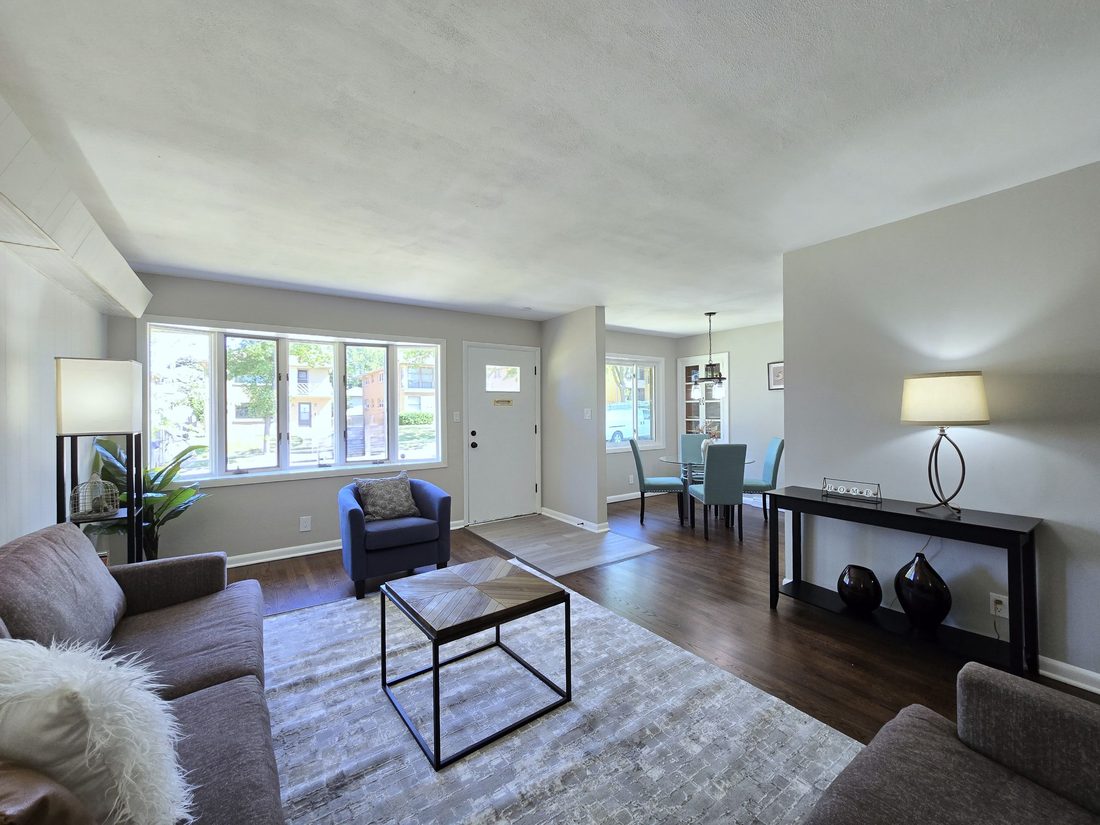
Our Milwaukee estate cleanout project shows exactly this: a mid-century ranch bought with the contents still in place, cleared out, and fully renovated. See all of our recent projects for more of the same.
Selling an Inherited House in Wisconsin — Common Questions
Do I need probate to sell an inherited house in Wisconsin?
Not always. If the home was held in joint tenancy or as survivorship marital property, if a transfer-on-death deed under Wis. Stat. § 705.15 was recorded, or if the home was deeded into a trust, ownership passes outside probate. Check the recorded deed at the Register of Deeds before assuming anything. If none of those apply and the house is the main asset, you are opening a probate.
Does Wisconsin have an estate tax or inheritance tax?
No to both. Wisconsin has no estate tax for deaths after December 31, 2007, and no inheritance tax for deaths on or after January 1, 1992. The federal estate tax can apply, but only to estates above the federal exemption, which is in the millions. What usually matters instead is capital gains when the house is sold — and stepped-up basis generally keeps that small if you sell near the date-of-death value.
Can I sell the house before probate is finished?
Usually yes. A personal representative with full authority under informal administration can often sell without a separate court order, subject to notice requirements and the terms of the will. What typically sets the timeline is the creditor claims window, which the court sets at not less than 3 nor more than 4 months. Your attorney and the title company will confirm what applies.
What is the small estate affidavit and can I use it for a house?
Wis. Stat. § 867.03 lets an heir, trustee, or former guardian transfer a decedent's property by affidavit when the property subject to administration in Wisconsin does not exceed $50,000 gross. It can reach real estate — a certified copy is recorded with the Register of Deeds — but a person named in the will as personal representative cannot take real property this way. Milwaukee-area home values often push an estate past the ceiling, so confirm the gross figure first.
What is stepped-up basis and why does it matter?
When you inherit property, your tax basis resets to fair market value at the date of death rather than what the decedent paid. If a parent bought a Milwaukee home for $70,000 and it was worth $340,000 when they died, your basis is $340,000. Sell near that value soon after and your capital gains exposure is minimal. Hold it for years while it appreciates and you owe gains on the growth since death.
What if my siblings and I disagree about selling?
Wisconsin provides a partition action under Wis. Stat. ch. 842, where a co-owner asks the court to divide the property or order it sold. It is a genuine last resort — expensive, slow, and hard on families. There is usually a better structure available: one heir buying out the others, proceeds held in escrow while a disagreement resolves, or a closing date far enough out that everyone has time to adjust.
Do I have to clean the house out before selling it?
Not if you sell to a cash buyer. Take what your family wants and leave everything else, including furniture and whatever is in the basement. We handle the cleanout ourselves — it is one of the main reasons families in this situation call us rather than listing.
What about Medicaid estate recovery?
If the decedent received certain long-term care benefits, Wisconsin may assert an estate recovery claim against the estate. It does not prevent a sale, but it is a payoff item that needs to be identified early rather than discovered days before closing. Raise it with your probate attorney at the outset.
Where do I find the deed?
The Register of Deeds in the county where the property sits. Milwaukee County's office is at the Courthouse and most Wisconsin counties offer some online search; otherwise a call or visit gets you a copy for a small fee. Search by owner name, address, or tax key number, and look for survivorship language or any later-recorded transfer-on-death deed or transfer into a trust.
What does probate cost in Wisconsin?
The court filing fee under Wis. Stat. § 814.66 is $20 where the net property subject to administration is $10,000 or less, and otherwise 0.2 percent of that net value. Attorney fees are typically hourly or a flat fee for routine informal administration — ask for the basis in writing. Weigh all of it against the holding costs of an empty house, which over a year often exceed the entire probate.
Wisconsin is a marital property state — how does that affect the house?
Under the Marital Property Act (Wis. Stat. ch. 766), property acquired during marriage is generally owned equally by both spouses regardless of whose name is on the deed, so only the deceased spouse's half passes at death. Many Milwaukee-area couples also hold their home as survivorship marital property, which passes the whole interest to the survivor automatically. A surviving spouse may already own the house outright.
Will the lender call the mortgage due when I inherit?
Generally not. The federal Garn-St Germain Act restricts enforcement of due-on-sale clauses on certain transfers, including to a relative on the borrower's death where that relative occupies the property, and servicers have obligations toward successors in interest. Notify the servicer promptly, ask what they need to confirm your status, and keep payments current — that is what keeps your options open.
Should we rent it out instead of selling?
Sometimes, but decide deliberately rather than by default. The house likely needs work before it can be rented legally and safely, landlording is a real job, Milwaukee has registration and lead-safe requirements for older rentals, and co-owning with siblings who did not want a rental strains families. If you do keep it, put a written agreement in place covering management, expenses, and how a future sale gets triggered.
How long before the heirs actually get money?
The sale can usually close within weeks of the personal representative being appointed. What delays distribution is the creditor claims period — court-set at not less than 3 nor more than 4 months — plus final accounting, which commonly puts the whole estate at six to twelve months. Selling the house early does not have to wait for any of that.