
On the weekend of August 9–10, 2025, a storm parked over the Milwaukee area and did not move. Milwaukee Mitchell Airport recorded 5.74 inches of rain on August 9 alone, the second-highest daily total on record there. The National Weather Service reported unofficial two-day totals of 10 to 12 inches in parts of the metro, with one reading in northwestern Milwaukee County above 14 inches. The Kinnickinnic, Milwaukee, Menomonee and Root rivers all set record highs. Basements that had stayed dry for decades took feet of water.
Eight months later it happened again on a smaller scale. Severe storms in mid-to-late April 2026 brought a second federal disaster declaration that covered Milwaukee County. For a lot of Milwaukee County homeowners, a wet basement went from an occasional nuisance to a known flood history.
If you are thinking about selling a house that flooded, or one that has taken water more than once, you have more to work out than the asking price. What do you have to tell a buyer? What happens to the insurance claim or FEMA money? Is it worth fixing before you sell? This guide walks through each question for Milwaukee-area sellers. It is general information, not legal or insurance advice.
Two Federal Disasters in Eight Months
It helps to know exactly which events you are dealing with, because buyers, insurers and lenders will ask.
- August 2025. FEMA declared a major disaster for Wisconsin (FEMA-4892-DR) on September 11, 2025, for severe storms, straight-line winds, flooding and mudslides from August 9 to 12. Individual Assistance for homeowners and renters was approved for Milwaukee, Washington and Waukesha counties.
- April 2026. After storms and flooding in April 2026, the federal government approved a major disaster declaration on June 30, 2026, and Milwaukee County residents became eligible for FEMA Individual Assistance. The county’s deadline to apply for FEMA aid and SBA disaster loans was August 31, 2026.
Both declarations matter after the water is gone. If you received federal assistance, there are conditions that can follow the house to the next owner (more on that below). And a buyer who looks up your address will see that it sits in a county with two recent flood declarations, so they will ask about the basement whether you raise it or not.
Water in the Basement Is a Disclosure Question
Most Wisconsin home sellers have to give the buyer a completed Real Estate Condition Report under Wis. Stat. ch. 709. Our guide to the Wisconsin condition report covers the form in full. Three parts of it matter most for a house that has flooded.
The Form Names Flooding Directly
The condition report asks whether you are aware of defects in the basement or foundation, and its own examples of basement defects include flooding, extreme dampness or wet walls, defects in drain tiling or sump pumps, and movement or deterioration in the foundation. A “defect” on the form is a condition that would have a significant adverse effect on the value of the property, significantly impair health or safety, or significantly shorten the expected life of the property if not repaired. The report also asks about floodplain status.
“Fixed” Is Not the Same as “Never Happened”
Many sellers who flooded once in August 2025, cleaned up and replaced the drywall assume there is nothing left to disclose. The law does not answer that cleanly. The Wisconsin REALTORS® Association’s legal hotline has pointed out that there is no clear statement in the law about how far back past events must be disclosed, and that Wisconsin attorneys differ. Some advise full disclosure of any past water. Others take the view that a condition that has been properly repaired is no longer a defect. The decision belongs to the seller, with the seller’s attorney if needed, not to the listing agent.
Our practical view is the same one we give on every condition report: when in doubt, disclose, and attach the paperwork. “Basement took about a foot of water on August 10, 2025. Drywall and carpet removed, walls treated, sump pump replaced by a licensed contractor, invoices attached” reads as a seller who handled it. Silence that an inspector or a neighbor later fills in reads as a seller who hid it, and that is how a sale falls apart or turns into a claim after closing.
The Buyer Can Walk if the Report Is Late
If you are required to provide the report and the buyer does not receive a completed copy within 10 days after accepting the offer, the buyer may rescind the contract under Wis. Stat. § 709.05. On a house with a flood history, buyers are watching for that report, so have it ready before you list.
If You Received FEMA Aid, Read This Before You Sell
This is the part of a flood sale that almost nobody mentions, and it can cost a seller real money years later.
Some federal flood disaster assistance comes with a condition: the owner has to buy flood insurance on the property and keep it. Your FEMA award letter will say if that applies to you. When it does, a federal law, 42 U.S.C. § 5154a, puts a duty on you when you sell. You must notify the buyer in writing, on or before the closing date, that they have to obtain flood insurance (if the property is not insured at closing) and maintain it.
The consequence for skipping the notice is specific. If you do not give it, the buyer later lets the insurance lapse, the house floods again, and federal disaster relief is paid to repair it, the law requires you, the former owner, to reimburse the federal government for that assistance.
So before you list:
- Find your FEMA determination letter and check whether the assistance carried a flood insurance requirement.
- If it did, tell your title company early and put the written notice in the closing file, signed by the buyer.
- If you took an SBA disaster loan for repairs, ask SBA whether it is secured by a mortgage on the house. If it is, it gets paid from the sale at closing like any other lien, and it belongs in your net-proceeds math.
Insurance: What Usually Paid and What Usually Didn’t
A lot of Milwaukee owners learned in August 2025 that a standard homeowners policy and a flooded basement are not the same conversation. Policies differ, so read yours, but the general shape is this:
- Surface flooding (water coming in from outside, overland or through window wells) is generally excluded from standard homeowners policies. It is covered by a separate flood policy, through the National Flood Insurance Program or a private carrier, and NFIP policies generally carry a 30-day waiting period before they take effect.
- Sewer or drain backup (water and sewage coming up through floor drains or fixtures) is usually covered only if the policy has a water or sewer backup endorsement, often with a limit far below a full basement repair.
Why this matters when you sell: an open claim, a denied claim or a partly paid claim is now part of the house’s history. If a claim is still open, ask your adjuster how a sale affects it before you sign a purchase agreement. And keep the whole file, including photos, the adjuster’s estimate and contractor invoices. It is the best evidence you have that the problem was dealt with.
Why Milwaukee Basements Back Up, and the Program That Helps
In much of the older housing stock the water does not come through the walls. It comes up the floor drain. In a heavy storm, rain and groundwater get into the sanitary sewer lateral, the private pipe from your house to the street, through connected downspouts, foundation drains and cracked or root-filled pipe. The lateral overloads and sends sewage and water back into the basement.
The Milwaukee Metropolitan Sewerage District runs a program aimed at exactly this, called Pipe Check. According to MMSD, it is open to one- and two-family homes in its service area with no income requirement. An approved contractor evaluates where clear water is getting in and does the work, and MMSD pays an incentive straight to the contractor. The rates MMSD lists (updated January 1, 2026) include $3,800 for disconnecting foundation drains, $1,500 for lining the lateral, $6,000 to $8,000 for a full lateral replacement, and $25 per downspout disconnection for up to four. The incentives do not cover the full cost, the homeowner pays the balance, and the incentive is taxable. MMSD can change the rates at any time, so confirm with MMSD at (414) 225-2250 before you count on them.
For a seller, Pipe Check work done before you list is one of the few repairs that speaks directly to a buyer’s biggest worry. A disclosure that says “flooded in 2025, lateral lined and foundation drains disconnected through MMSD Pipe Check in 2026” is a very different document from “flooded in 2025.”
What Water Leaves Behind
Standing water is the visible part. What a buyer’s inspector looks for is what came after:
- Mold behind finished walls, under carpet and in stored belongings, especially in basements that were finished and not fully opened up after the water went down.
- Mechanicals that sat in water: furnaces, water heaters, electrical panels and washers. Many owners replaced theirs after August 2025. If yours were dried out and kept, expect questions.
- Foundation movement, horizontal cracks or step cracking in block walls, which saturated soil can make worse.
- Unpermitted repairs done in a hurry. A rebuilt basement that never got permits is the same problem we describe in the condition report guide, just newer.
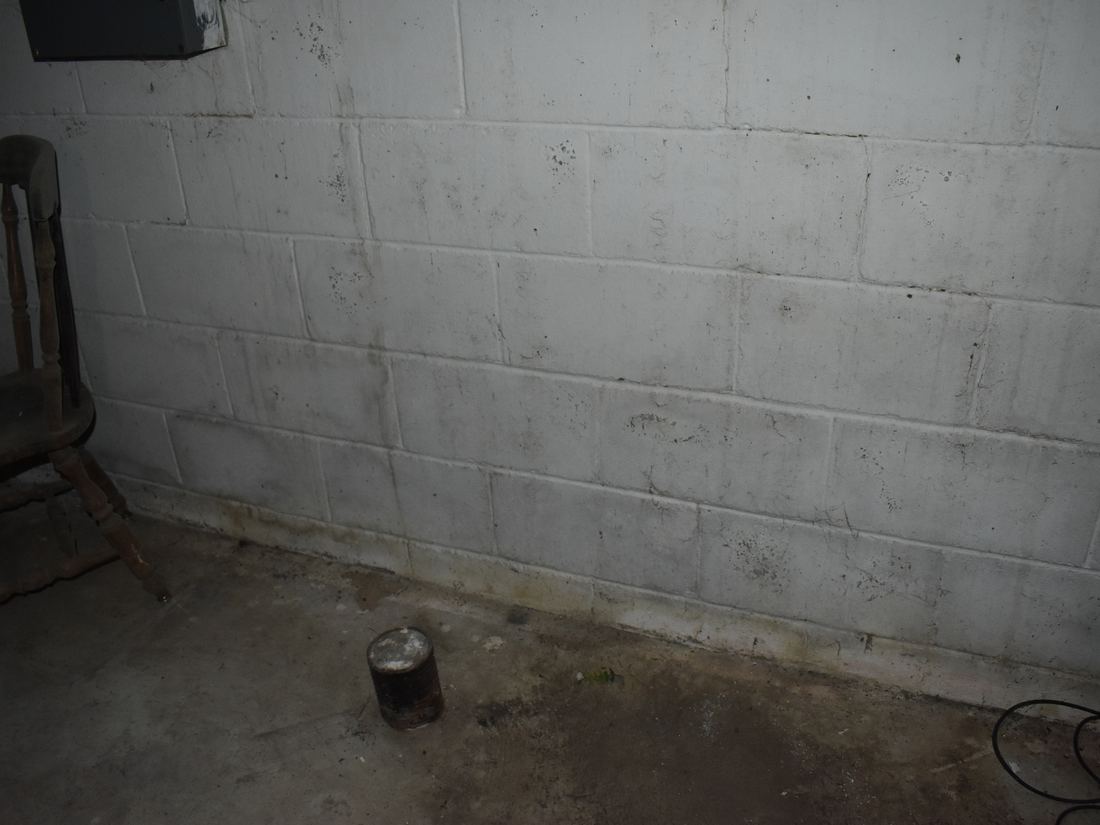
We have bought houses in this condition. A St. Francis rental came to us with water coming through the basement walls and mold through the lower-level drywall, the photo at the top of this page. A Milwaukee bungalow had a long horizontal crack across one basement wall and step cracking at a corner. Neither was a retail buyer’s project, and both sold.
Your Three Options
1. Repair Fully, Then List
If the house is otherwise in good shape and the repair is finished, documented and permitted, listing with an agent usually brings the highest price. The buyer pool for a dry, renovated basement with paperwork is the normal buyer pool. The cost is the time and money to get there, and you carry the house while the work is done.
2. List As-Is With Full Disclosure
You can list without fixing anything, priced for the condition, with the flood history disclosed. Expect a smaller pool, and expect financed buyers to run into trouble. An appraiser or lender can flag active water damage, missing mechanicals or mold, and the buyer’s inspection often turns into a renegotiation of the price you already agreed on.
3. Sell Directly to a Cash Buyer
When the basement is still torn up, the claim money did not cover the repair, the house is sitting vacant while you live somewhere else, or you simply do not want to go through another storm season with it, a direct sale removes the inspection and financing risk. The trade-off is price: a cash buyer prices the repairs into the offer. Our as-is selling page explains how that works, and our side-by-side comparison lays out listing against selling direct so you can see which fits.
Whichever route you choose, the disclosure and FEMA notice rules above still apply. Selling to an investor does not change what you know about the house.
Paperwork to Gather Before You Talk to Anyone
- Insurance claim file: the adjuster’s estimate, payment letters and any denial.
- FEMA determination letter, and any SBA loan documents.
- Contractor invoices for drying, mold work, drywall, mechanical replacement and waterproofing.
- Permits for any rebuilt or refinished space.
- MMSD Pipe Check paperwork, if you used the program.
- Photos from during and after the flood.
With that folder, a buyer of any kind can price the house on facts instead of fear. Without it, every buyer assumes the worst.
How We Handle a Flooded House
We look at the basement first and ask what happened, when, and what has been done since. We price the remaining work into the offer and tell you how we got to the number, so you can compare it to what fixing and listing would net. We take the house as it is, with no inspection contingency and no lender, and we close on your timeline. If your repairs are already done and the house would list well, we will tell you that too. The how it works page explains our process, and our FAQ page covers what we pay and how closing works.
The Short Version
Two federally declared floods in eight months have left many Milwaukee-area houses with a water history. On the Wisconsin condition report, flooding is named as a basement defect, and the safest course is to disclose past water with the repair paperwork attached. If your FEMA aid required flood insurance, you must give the buyer written notice at closing under 42 U.S.C. § 5154a or risk repaying future federal aid. Insurance rarely covered all of it, so keep the claim file. MMSD’s Pipe Check program can offset part of the cost of fixing backups at the source. Then choose between repairing and listing, listing as-is, or selling direct, based on the condition and your timeline.
Selling a Flooded House in Milwaukee — Common Questions
Do I have to disclose past basement flooding when I sell my house in Wisconsin?
Most Wisconsin sellers must complete the Real Estate Condition Report under Wis. Stat. ch. 709, and the form lists flooding, extreme dampness and wet walls as examples of basement defects. Wisconsin law does not say clearly how far back past events must be disclosed, and attorneys differ on repaired conditions, so the safest course is to disclose the flood and attach your repair invoices. Our condition report guide explains the form.
I received FEMA assistance after the flood. Does that affect selling my house?
It can. If your federal flood assistance required you to buy and keep flood insurance, 42 U.S.C. § 5154a requires you to tell the buyer in writing, by the closing date, that they must obtain and maintain flood insurance. If you skip the notice and the property later floods without insurance and receives federal disaster relief, you can be required to reimburse the federal government. Check your FEMA determination letter and tell your title company early.
Does homeowners insurance cover a flooded basement in Milwaukee?
Usually only in part, and it depends on the policy. Surface flooding from outside is generally excluded from standard homeowners policies and needs a separate flood policy. Sewer or drain backup is usually covered only with a water or sewer backup endorsement, often with a limit. Keep the full claim file when you sell; it is your best evidence of what was repaired.
Can I sell a Milwaukee house that still has water damage or mold?
Yes. You can repair it and list, list it as-is with full disclosure and a price that reflects the condition, or sell directly to a cash buyer who prices the repairs into the offer and buys without an inspection contingency or lender. Either way, the condition report and any FEMA flood-insurance notice still apply. Our comparison page sets the options side by side.